A worker from another trade gets injured. The project gets sued. And your indemnity clause means you're paying for the head contractor's lawyers.
You're on site. A plumber from another trade gets injured. Doesn't matter why — maybe he wasn't watching where he was going, maybe someone else left something in his way. But he gets hurt, he sues the head contractor, and the head contractor turns around and sues you.
You're on the hook for his injuries. You weren't even there when it happened.
This is what a broad indemnity clause does. It makes you liable for things that aren't your fault.
There's a version that's actually fair. And there's a version that's absolutely brutal.
The fair version says: "You're liable for claims that arise from YOUR negligence or YOUR breach of the contract."
That makes sense. You did something wrong, you pay for it.
But the brutal version says: "You're liable for ALL claims arising from the work, regardless of fault."
Or even worse: "You indemnify the head contractor against ALL claims, including claims arising from the head contractor's negligence."
When that's in your contract, you're not just liable for your own stuff-ups. You're liable for everyone else's.
Let me give you a real scenario. A concreter signs a contract for a commercial job. The building has 8 different trades on it at once — electricians, plumbers, carpenters, glazers, the lot.
The concreter's clause says: "The subcontractor indemnifies the principal contractor against all claims, damages, losses, and liabilities arising from the works."
One day, an electrician leaves a cable across the floor. A plumber trips over it. He goes to hospital. Fractured leg.
The plumber sues the head contractor. The head contractor's insurance pays out. But the head contractor's contract says the concreter has to indemnify them against claims. So the head contractor claims that loss from the concreter's indemnity.
The concreter didn't cause the injury. The electrician did. The concreter wasn't even responsible for the cable. But the indemnity clause is so broad that it covers "all claims arising from the works" — and because the concreter is part of the project, the claim is technically "arising from the works."
The concreter's insurance company says: "That's not a covered loss. You indemnified them against your own liability, not someone else's negligence."
So the concreter pays out of pocket.
Electrical contractor. Shopping centre refurbishment. The contract said: "Contractor indemnifies the principal and all other parties on the site against any claims arising from the works."
During the job, a member of the public slipped in a puddle in an area the electrical contractor was working in. Not because of any electrical work — just a puddle from the builders cleaning up. But the person got injured and sued.
The head contractor claimed the electrical contractor's indemnity should cover it. The electrical contractor's insurance said the clause was too broad and they wouldn't cover it. The electrical contractor paid $45,000 in legal fees and settlement just to make it go away.
He did nothing wrong. But his indemnity clause was so loose that he ended up paying for something another contractor caused.
A fair indemnity says: "You indemnify me against claims that arise from YOUR negligence or YOUR breach of this contract."
That's it. You did something wrong, you pay. Your insurance covers it, your insurance pays. That's normal.
What's NOT fair:
If your clause says any of those things, you're taking on risk that's not yours to take.
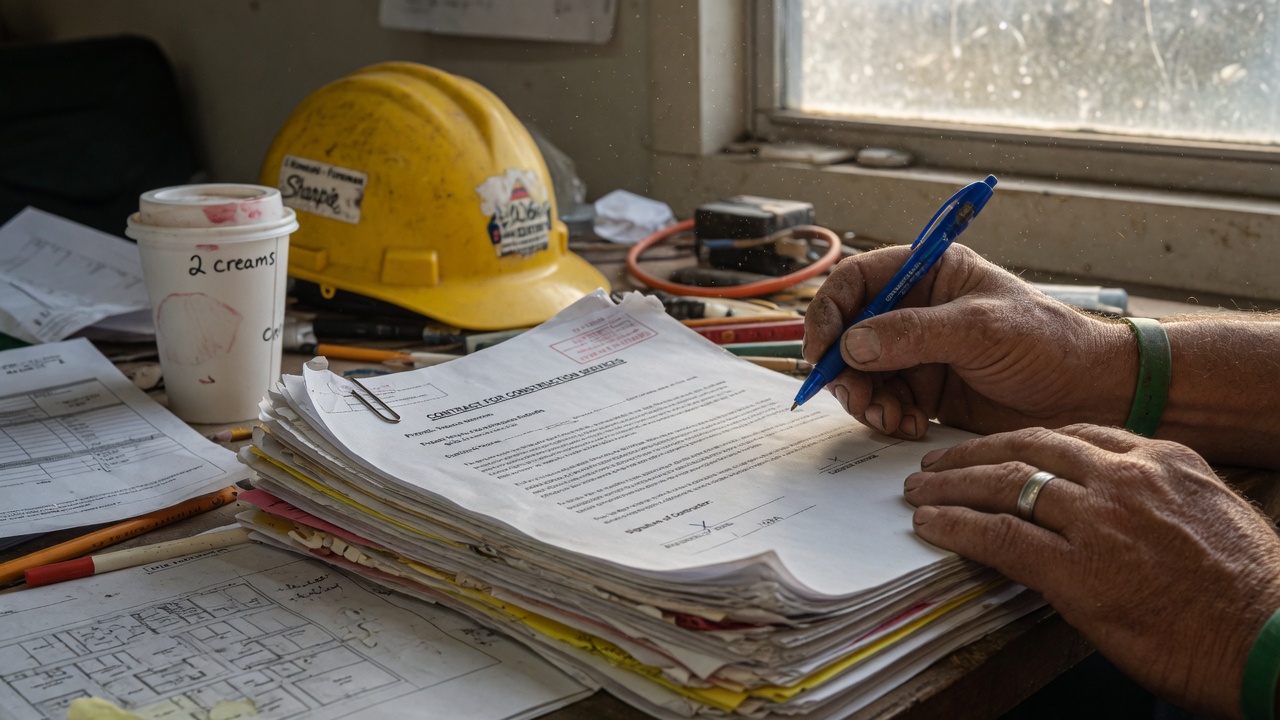
Search for "indemnify" or "indemnity" in your contract. You might find it in a section called "Liability" or "Insurance and Indemnity."
Read the exact words. Is it:
Look also for who you're indemnifying. Just the head contractor? Or the head contractor, all other contractors, the project owner, the architect? The more parties you're indemnifying, the broader your exposure.
And look for what triggers the indemnity. Is it only your breach? Or "any claims relating to the works"? The broader the trigger, the worse it is for you.
If the indemnity is too broad, ask for it to be narrowed.
Say: "Our insurance won't cover an indemnity this broad. We can indemnify you against claims arising from our negligence, but not claims from other parties or from your negligence. Can we change it?"
They might push back. They'll say their insurance requires it. Here's the truth: it's not their insurance that requires it. It's their risk management. They're trying to shift all the risk onto you so it comes out of your pocket instead of theirs.
If they push back hard, here's a compromise: offer to get extra insurance. Say: "We'll get a project insurance policy that covers the indemnity as written, but it'll cost $X. Do you want to add that cost to the quote?"
Most head contractors will suddenly say the indemnity is negotiable when they realise they have to pay extra for it.
If you can't get them to change it, at least narrow it down:
And get it in writing that your insurance is the primary cover for the indemnity. Make them confirm they understand your insurance is covering it, not paying out of your pocket.
An indemnity clause that's too broad can cost you thousands. It can also cost you your insurance if they decide it's not covered.
Search for "indemnify" in the contract. Read that whole section. If it's broader than "claims arising from your negligence," flag it. Either get it changed or get a construction lawyer to review it.
Your company should be responsible for its own negligence. It shouldn't be responsible for everyone else's.
Upload your subcontract and get a free risk report in under 60 seconds. See exactly where you're exposed.
Check my contract — it's free