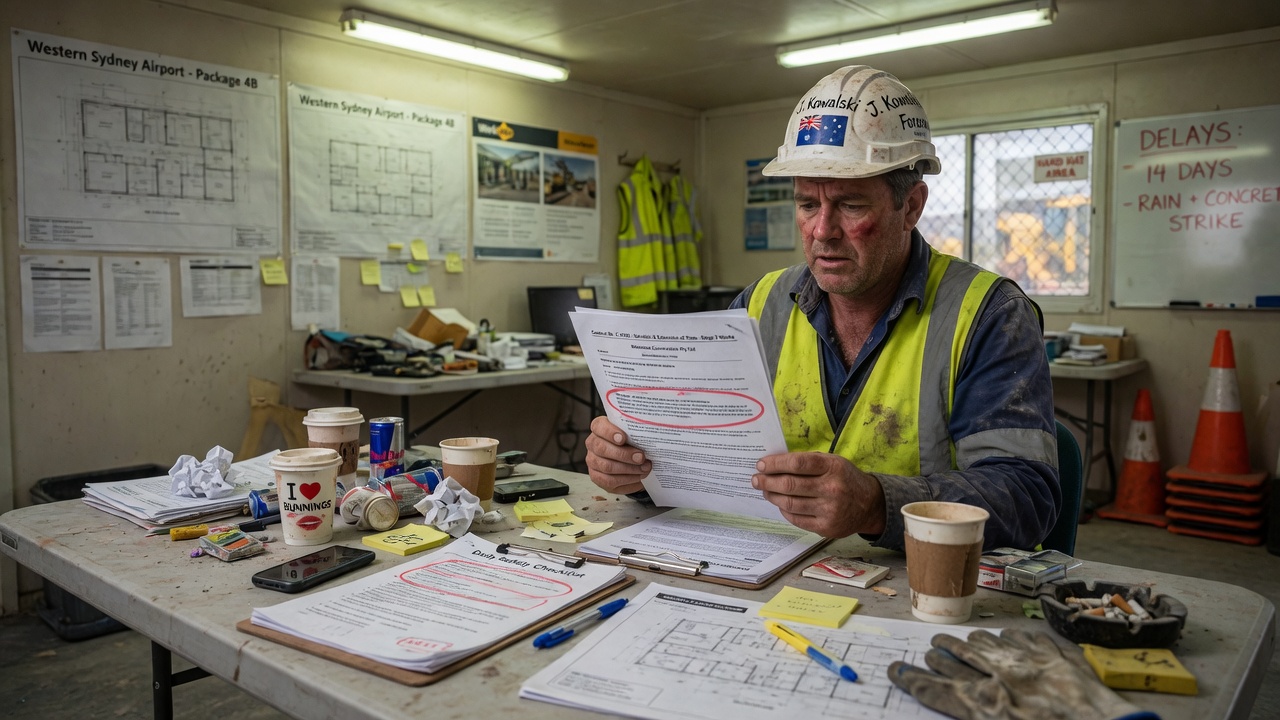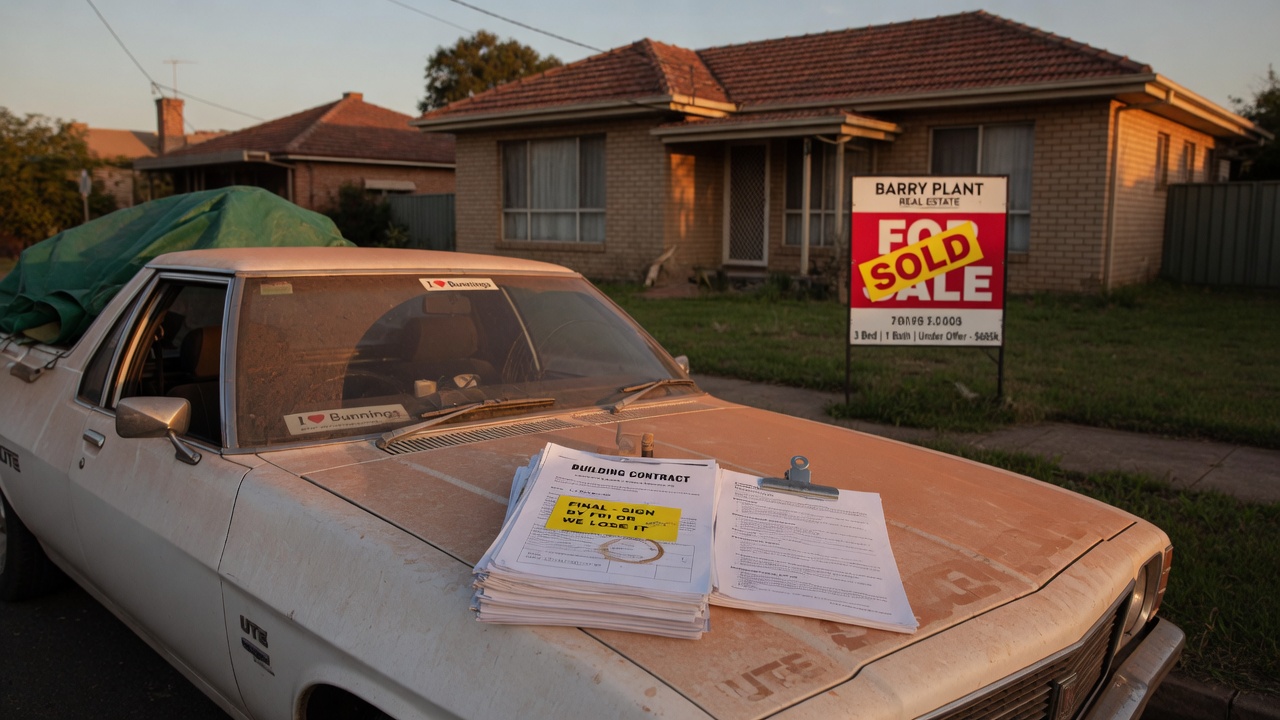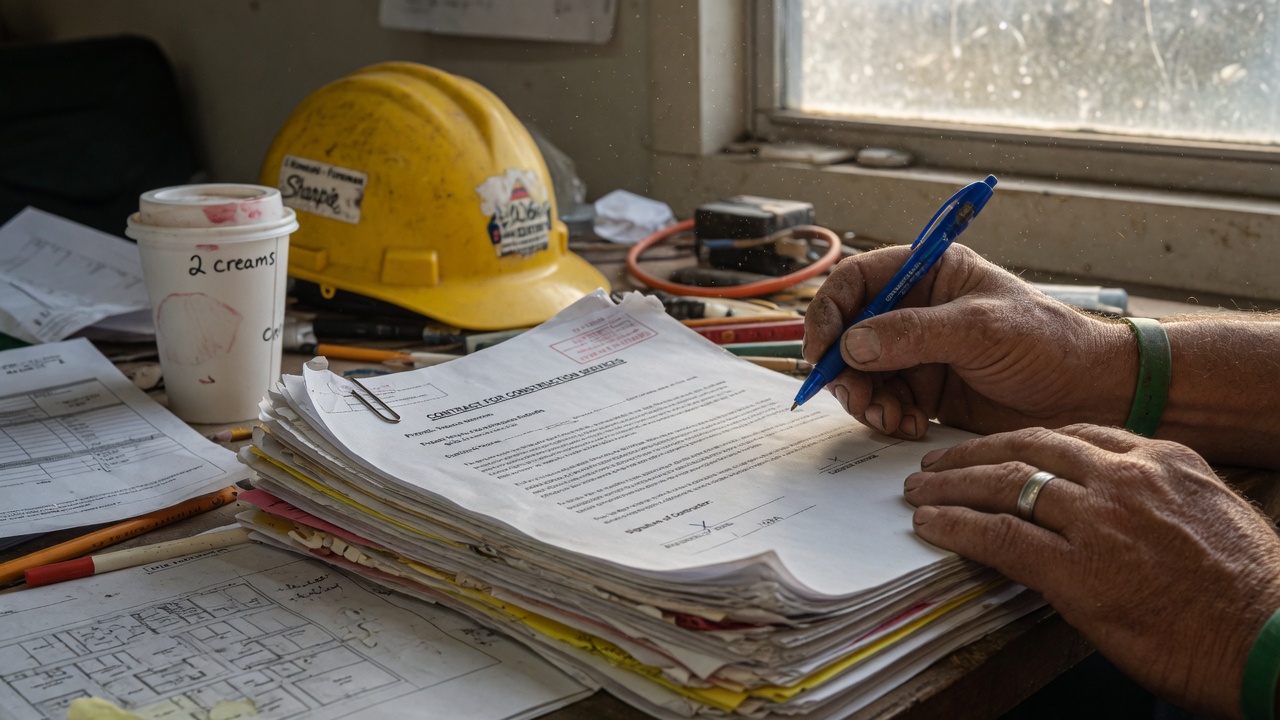
The job starts Monday. The contract is 15 pages. You scroll to the signature line. That 90-second decision can cost you thousands.
The job's starting Monday. The head contractor's just emailed the subcontract. It's 15 pages. You've got three other quotes to chase, the van needs a service, and your lunch is getting cold.
You scroll to the signature line and sign it. Problem solved.
Except it's not.
That contract you didn't read could be the most expensive decision you make this year. Not because of what you're getting paid. Because of what you're giving away.
A mate of mine, a concretor, signed a subcontract for a $180,000 job. Took him 90 seconds. He didn't read the bit about liquidated damages—the clause that says if you miss the deadline, you owe the head contractor money per day until it's done.
Rain delayed the pour. Nobody's fault. Seven days over. That clause cost him $3,500.
Another electrician I know got hit with a variation request halfway through. The contract said she couldn't claim for variations unless she'd written to the head contractor within 48 hours of the issue happening. She didn't know that clause existed. She did six weeks of extra work and got nothing for it. Twelve thousand dollars, vanished.
A plumber signed a personal guarantee without reading it. The company went under. The head contractor came after his house.
These aren't edge cases. They're Tuesday.
Most subbies don't read contracts because they think there's no time. But the cost of not reading it almost always exceeds the cost of reading it. Usually by a mile.
You don't need to read the whole thing. Just these five bits. If they're buried in your subcontract, they can cost you serious money.
Liquidated damages. This is the penalty clause. It says: if you don't finish on the agreed date, you owe me $X per day. Sounds simple. Read it anyway. Is the amount fair? Does it account for things outside your control—rain, site access, delays by other trades? A lot of contracts have unlimited LD clauses. Some just say "damages as appropriate." That's a blank cheque.
Indemnity. This is the one that wakes you up at 3 AM. It says you'll cover the head contractor's legal costs if something goes wrong, even if it's not your fault. A worker gets injured on site. The project gets sued. Suddenly you're paying for the head contractor's lawyers. Some indemnities are so broad they cover things that have nothing to do with your work. Read the exact wording. If it says "indemnify against all claims arising from the contract," that's different from "indemnify against claims arising from your negligence." The first one is dangerous.
Variations procedure. How do you get paid for extra work? Is there a process? A timeframe? Or is it vague? A lot of subbies do variations and claim them at the end. The contract says you needed written approval within 48 hours. You don't get paid. Make sure the variations clause actually lets you get paid for extra work.
Retention. The head contractor holds back a chunk of your money—usually 5%—until the job's finished or the defects period ends. That's standard. But how long do they hold it? What triggers its release? If it says "at practical completion," check what practical completion actually means in the contract. Some contracts hold retention for 12 months. By then you've forgotten about it.
Dispute resolution. If something goes wrong, how do you settle it? Court? Arbitration? Mediation? Some contracts push disputes toward arbitration or expert determination, which is faster and cheaper than court. Some are silent, which means court, which costs a fortune. And some have clauses that let the head contractor claim against you but don't give you the same right—read both directions.
Personal guarantees are a special kind of bastard. They say: if the company can't pay, the owner guarantees it personally. So if your construction company goes under, the head contractor can come after your house, your car, your savings.
Some head contractors slip these into subcontracts expecting you won't read them. Some do it deliberately. Either way, you need to see it coming. If there's a personal guarantee in your subcontract and you don't understand why, don't sign it. Negotiate it out, or get a lawyer to explain it. That's not being precious—that's protecting your family.
Reading a subcontract properly takes about 30 minutes. Maybe an hour if you've never seen one before.
That's 30 minutes to avoid getting done over for $3,500. Or $12,000. Or your house.
Do the maths.
You don't need to understand every word. You need to understand the money bits—how much you're getting paid, when you get paid, what stops you from getting paid, what happens if something goes wrong, and what you're personally liable for.
If those bits don't make sense, ask. Email the head contractor and ask them to explain it. If they won't, or they get defensive, that's a warning sign.
Reading contracts is boring and it's stressful. There's a reason people avoid it. But there are tools now that can scan your subcontract and flag the dangerous bits before you sign.
Check your contract before you sign it. See which clauses are actually risky—which ones would cost you money, which ones are standard, which ones are way off. It takes five minutes. It costs nothing. And it might save you more than you make in a month.
You've worked hard to build your business. Don't hand it over to a clause you didn't read.
Upload your subcontract and get a free risk report in under 60 seconds. See exactly where you're exposed.
Check my contract — it's free