You scrolled past it. Everyone does. But that single number can quietly snowball into a deduction bigger than your profit margin.
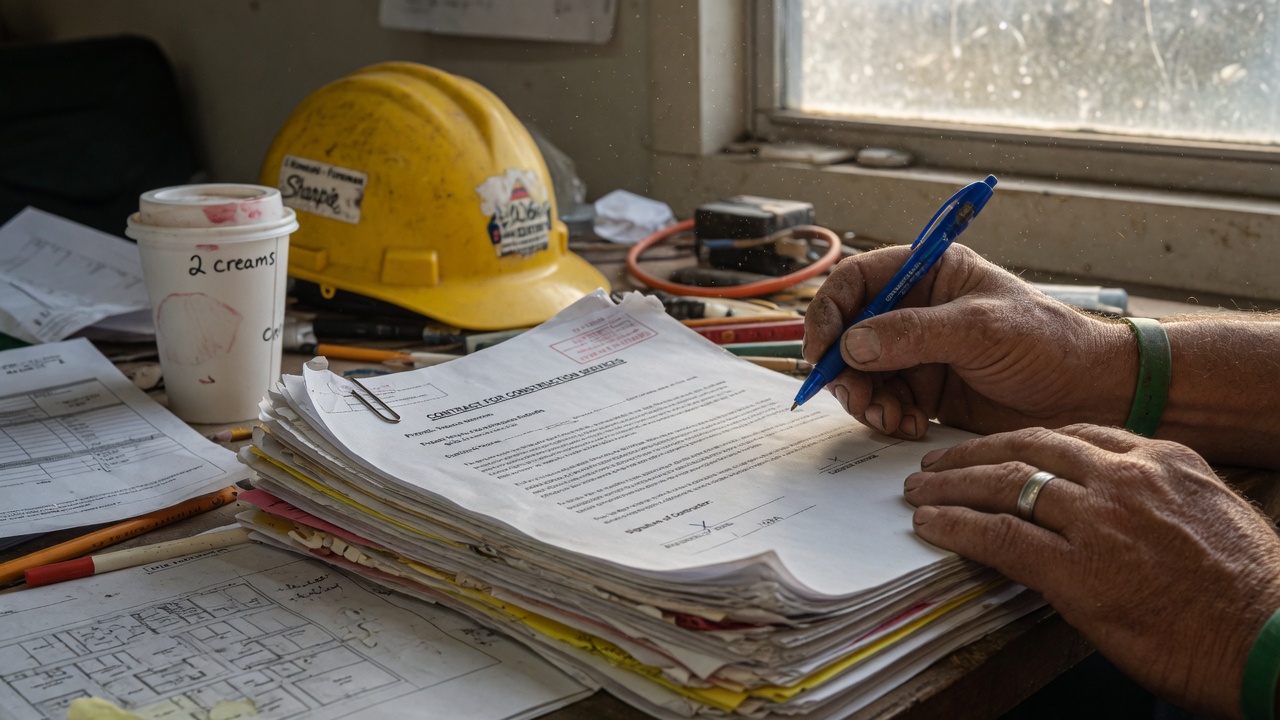
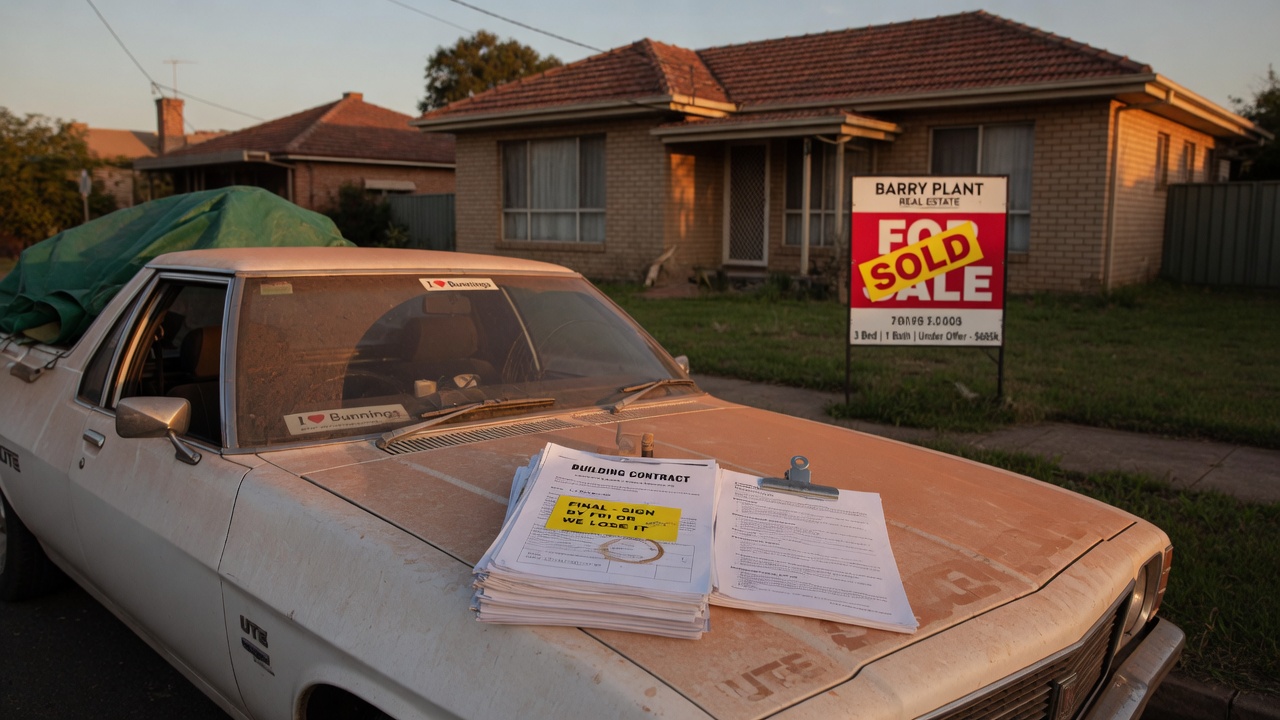
You've seen the contract. Thirty pages. Mostly boilerplate. You skip to the insurance page, tick some boxes with your boss, and sign. Two years later you're staring at an invoice from the head contractor for $87,000 in liquidated damages deductions. The clause was right there on page 12. You didn't read it.
This happens. More often than you'd think.
Liquidated damages is a fixed daily penalty the head contractor can deduct from your invoice if you don't finish by a certain date. It's usually written as a single number: "$500 per day" or "$1,200 per day." Looks innocent. It's not.
The logic behind it is reasonable enough. The head contractor says: "If you delay practical completion, my other trades can't start. I lose money. Rather than argue about how much I actually lost, we'll agree upfront that it's $500 a day."
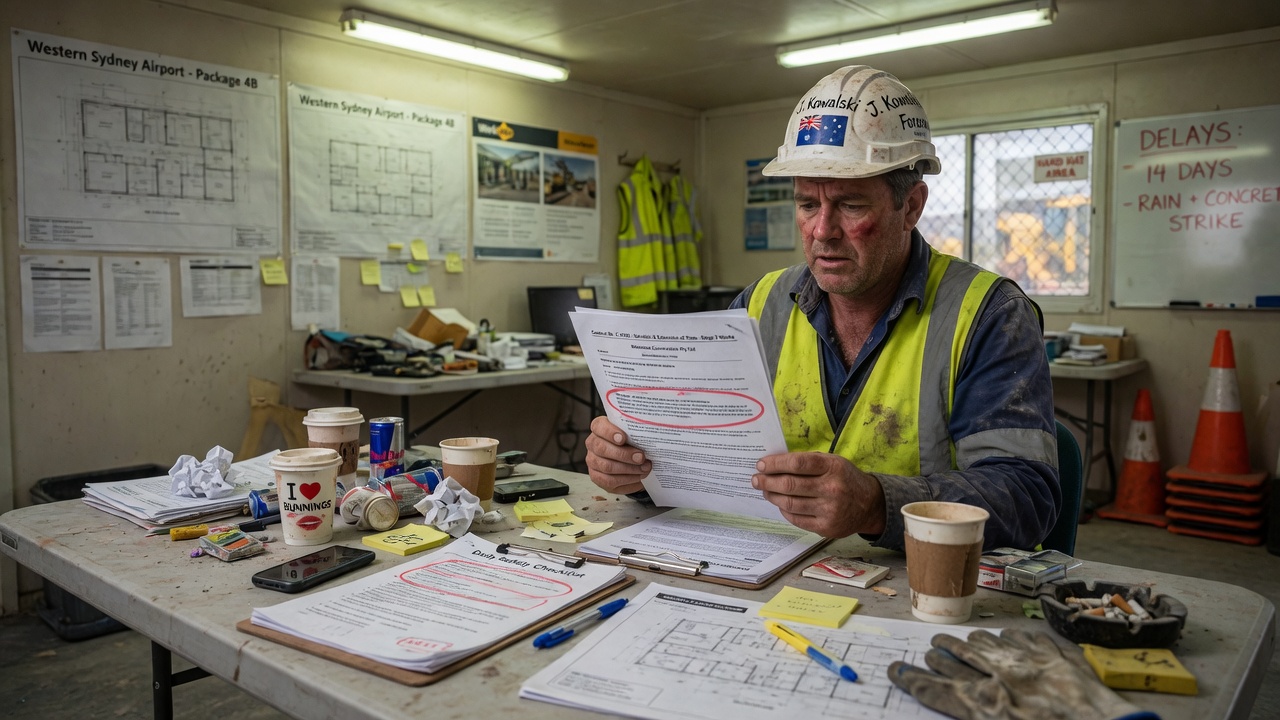
That sounds fair in the contract. Then reality hits. You hit delays. Weather. Site access problems. The head contractor finds extra work and adds variations. Concrete trucks break down. Materials arrive late. Suddenly you're three weeks behind. At $500 per day, that's $10,500 gone. Six weeks behind? $21,000. And the head contractor deducts it directly from your final payment.
Let's say you quote $180,000 for an electrical fit-out. The contract says practical completion is 12 weeks, with $800 per day liquidated damages for delays beyond your control—and yes, that's how loose the language gets.
Twelve weeks is 84 calendar days, roughly 60 working days. So you've got maybe 8-10 weeks of actual weather and unavoidable delays baked in before the clock starts ticking against you. Except it never works out that clean.
You hit week 8 and the head contractor hasn't done the structural inspections they're supposed to do. You sit idle for a week. Your 8-week buffer is gone. You push hard, make up time, and finish on day 86. Two days over.
That's $1,600 deducted. They won't negotiate. It's in the contract.
But here's where it gets worse.
Some LD clauses have a cap. "Liquidated damages shall not exceed 10% of the contract value." That's your circuit breaker. At $180,000, you're protected at $18,000 max.
Many don't. And the ones that don't can bleed you dry. I've seen subcontractors hit 8-week delays on major projects with uncapped LD clauses. Do the math yourself. At $1,000 per day over 50 extra days, that's $50,000. Sometimes more. One subbie we know about took a $120,000 hit. The LD deduction was bigger than his profit margin.
And because it's in the contract, it's legal. The head contractor doesn't even have to prove they actually lost that money. That's the whole point of liquidated damages—it's a pre-agreed amount, not a real loss calculation.
The knife twist? A lot of delays aren't your fault.
The head contractor's project manager changes timelines. Site access gets delayed. The concrete contractor is slow, holding up your electrical work. Inspections get bunched. Weather shuts the site for two weeks—but the LD clause doesn't have a weather exclusion, so you cop the penalty anyway.
Some contracts are slightly smarter and say "delays caused by circumstances beyond the contractor's reasonable control" don't count. But "reasonable" is a subjective word. And arguing about it in the middle of a job? You need the head contractor to keep giving you work. You swallow it.
When you're reading a contract, hunt for these words:
"Liquidated damages shall be payable by the subcontractor at the rate of $[amount] per day for each day of delay beyond the date of practical completion."
Then check three things:
Is there a cap? Look for "provided that liquidated damages shall not exceed [X% of contract value]." If you don't see that sentence, you're uncapped.
What counts as delay? Does the clause say "delays caused by the subcontractor" or just "delays" full stop? The first is tighter. The second makes you liable for things you can't control.
Is there a weather exclusion? A decent clause says "provided that delays caused by weather or force majeure do not trigger LD." Bad ones don't. If the site floods and you lose a week, you still owe.
That innocent-looking $500 per day translates to $2,500 per working week. Over a six-month job, it's worth $65,000 a year. It's not a penalty—it's a second job you're working for free if anything goes sideways.
A typical subbie profit margin is 8-15%. On a $180,000 job, that's $14,400 to $27,000. An uncapped, loosely-defined LD clause can wipe out your entire profit in a few weeks of delays.
And delays happen. Not always because you're slow. Sometimes because the industry is.
Before you sign, get the LD clause tightened up. Here's what you're looking for:
If they won't budge on the clause itself, at least negotiate a longer practical completion date that gives you buffer room. Or negotiate the daily rate down.
Don't just sign it and hope.
Every tradie thinks delays won't happen to them. You've built this job a hundred times. You know how to move fast. Then a concrete pour goes wrong, a delivery gets missed, or the electrician who was supposed to pre-wire doesn't show, and suddenly you're three weeks down with no way back up.
That's when you'll think about that $500/day clause. And by then it's too late.
Check your contracts. Especially the LD clause. Look at page 12. Or page 8. Or wherever it is in yours. If it's uncapped and loosely worded, flag it. Negotiate. Don't be the subbie who learned this lesson the expensive way.
If you're not sure what you're looking at, or you want a second opinion on your LD clause before you sign, that's what we built ContractCheck for. Upload your contract, see exactly what your LD exposure is, and get clarity on what you're actually agreeing to.
One bad clause could cost you more than the whole job.
Upload your subcontract and get a free risk report in under 60 seconds. See exactly where you're exposed.
Check my contract — it's free