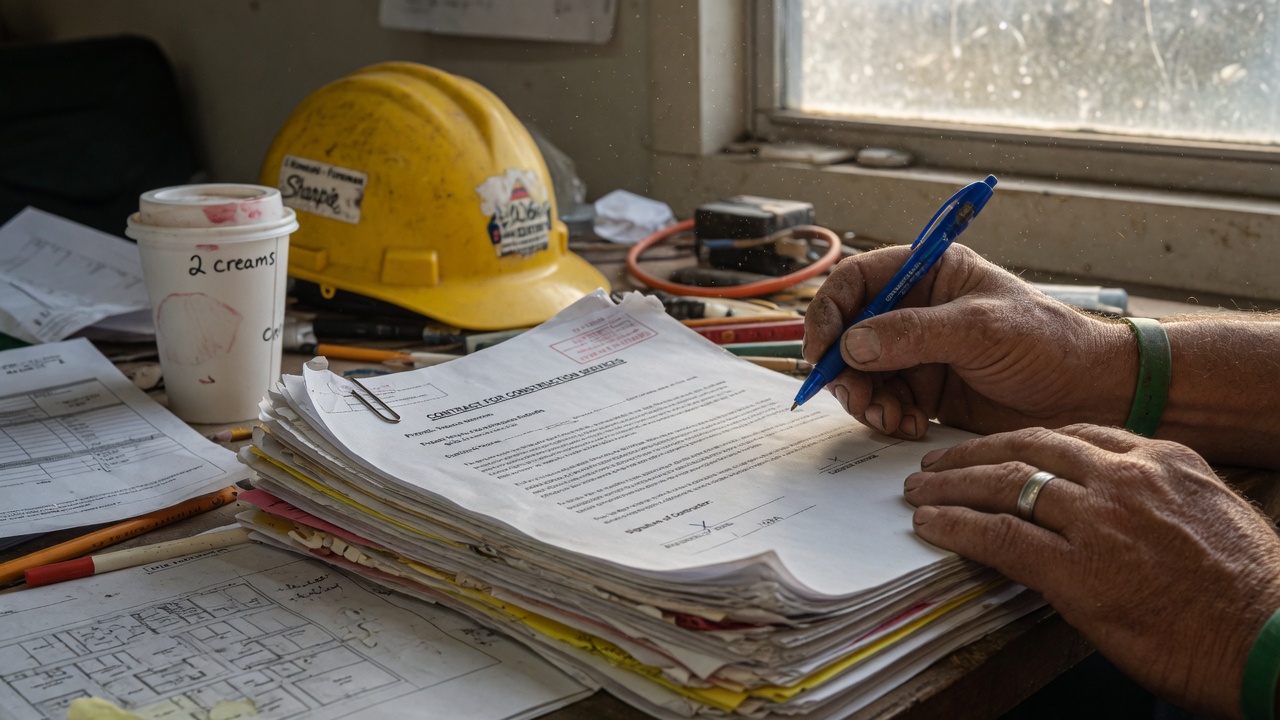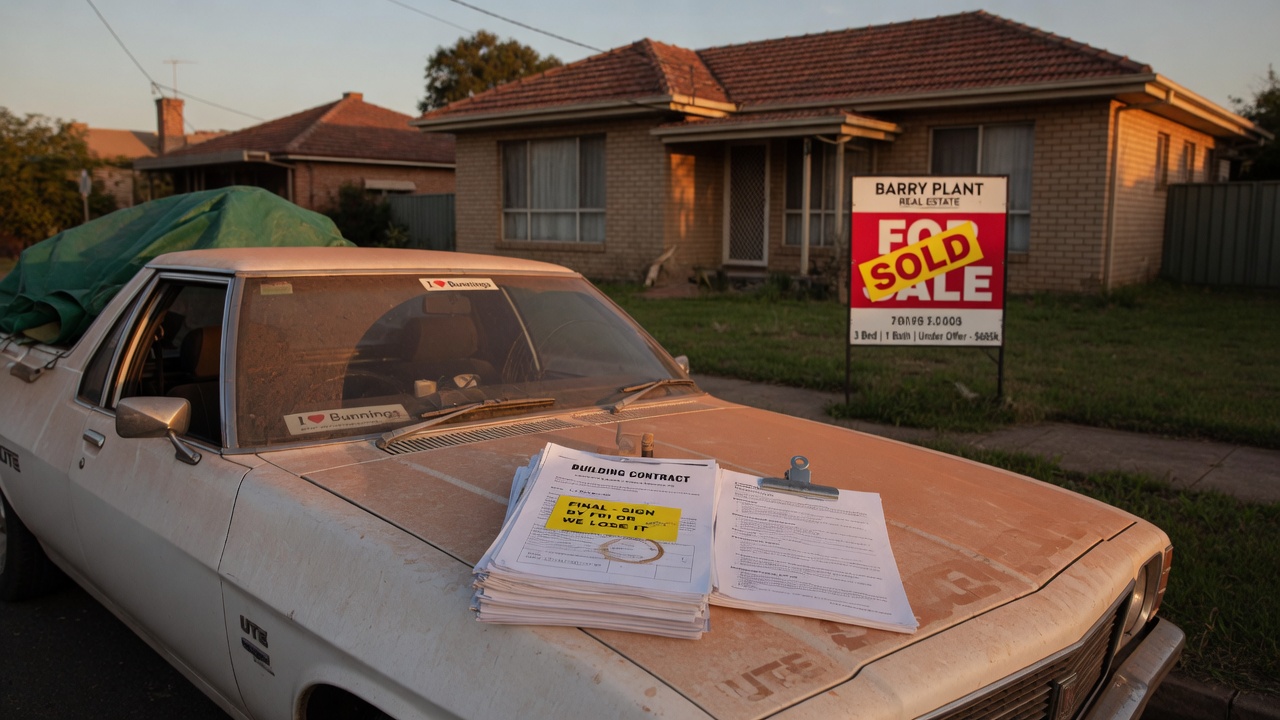
Personal guarantees are a special kind of trap. Your company goes under — they come after your house, your car, your savings.
You signed the contract. Your company got the job. Three months in, the head contractor runs out of money. Your company gets stuck for unpaid invoices. Then the lawyers come.
But they're not coming after your company. They're coming after you personally.
This is what a personal guarantee does. It takes your company's liability and puts it on you — as an individual. Not just your share of the profit from the job. Your house. Your car. Your personal bank account. Everything.
Most head contractors don't lead with it. You're focused on the scope, the price, the start date. By page 9, you've mentally checked out. That's when they're most likely to stick a PG in there.
It usually reads something like: "The subcontractor guarantees all obligations of the subcontractor party and personally undertakes responsibility for performance of this contract."
Or sometimes softer: "The principal contractor may require a personal guarantee from the company director."
Either way, it means: if your company can't pay, they can come after the people who own it. You, personally. Not just your company's assets — your personal assets.
Let me give you a real one. A concretor in Brisbane took a $120,000 contract. He signed it without reading it carefully. The contract had a personal guarantee buried in the back. Halfway through, the head contractor stopped paying. When the job finished, the company was $35,000 short on invoices.
The head contractor sued. The concretor thought they'd just seize the company's equipment and bank account — that's the normal cost of doing business. But because of that PG, the lawyers went after his personal guarantee. They got a court order. His house got registered as collateral. He had to sell it to settle the debt.
He still had to buy a house to live in. That debt cost him his equity.
Another one: electrician in Melbourne. She took a job that went wrong — the head contractor asked her to do work outside her scope, she did it anyway to stay friendly, and it had to be redone. $15,000 in rework. The contract had a broad indemnity clause AND a personal guarantee. The head contractor claimed she was liable for the rework cost under her indemnity clause. Because of the PG, they didn't sue the company — they sued her personally.
She paid $15,000 from her personal savings to avoid a judgment on her house.
Here's the thing: in normal commercial contracts, you don't give personal guarantees. A limited company exists for a reason — to separate your personal liability from your business risk. That's the whole bloody point of running as a Pty Ltd instead of a sole trader.
A head contractor asking for a PG is asking you to give up that protection. They're saying: "We don't trust your company to pay, so we want to come after you personally if things go wrong."
Sometimes they'll argue it's just about performance — that you're guaranteeing you'll do the work, not guaranteeing payment. But even that's risky. If the definition of "performance" is loose, or if they claim you didn't perform when you think you did, they can use that PG to go after your personal assets instead of dealing with your company.
Look for these phrases:
They might be in the contract as a separate clause. They might be embedded in payment terms or liability sections. Some contracts have them in a separate guarantee schedule at the back. That's the sneaky version.
If you see ANY of these, stop and read that section carefully. Don't skim it. Read every word.
If you see a personal guarantee, your first move is to ask the head contractor if it's negotiable. Most of them expect you to ask.
Say this: "We're happy to sign the contract, but we need the personal guarantee removed. Our accountant advises against it. Is there a version without it?"
Sometimes they'll say yes. Sometimes they'll say the head contractor's insurance requires it. If they push back, you have a choice: walk away, or negotiate what the PG actually covers.
If you have to keep some form of PG, get it narrowed down. Instead of "personally liable for all obligations," make it "personally liable only for payment obligations that the company cannot meet from its assets." That limits them to money owed — not claims for damages or rework.
Actually, even better: have the PG expire. Make it "Personal guarantee applies for 12 months after practical completion, then terminates." That gives them time to pursue the company, but doesn't leave you exposed forever.
And get it in writing that the company's insurance covers the liability. If you're guaranteeing something, at least make sure your insurance actually covers it.
Read the whole contract. I know, I know — it's long and boring. But a personal guarantee can cost you more than the whole job is worth. Spend an hour on it.
If you can't face reading it yourself, use a tool that flags this stuff for you. At minimum, search for these words: guarantee, personal, director, indemnity, liable, undertake. If any of them are in there, read that section carefully.
And if you're not sure what something means, ask. Either the head contractor or a construction lawyer. A one-hour legal consult costs $200-300. Losing your house costs a lot more.
Your company should make money. It shouldn't cost you your personal assets to do it.
Upload your subcontract and get a free risk report in under 60 seconds. See exactly where you're exposed.
Check my contract — it's free