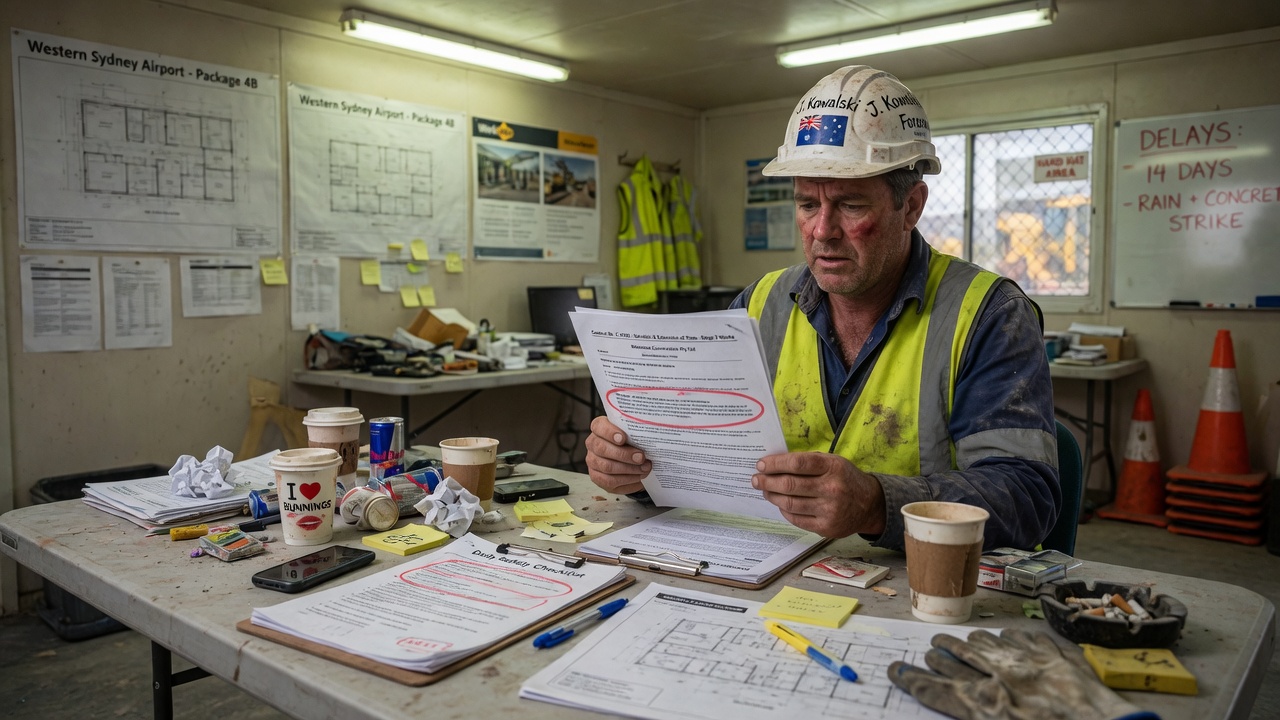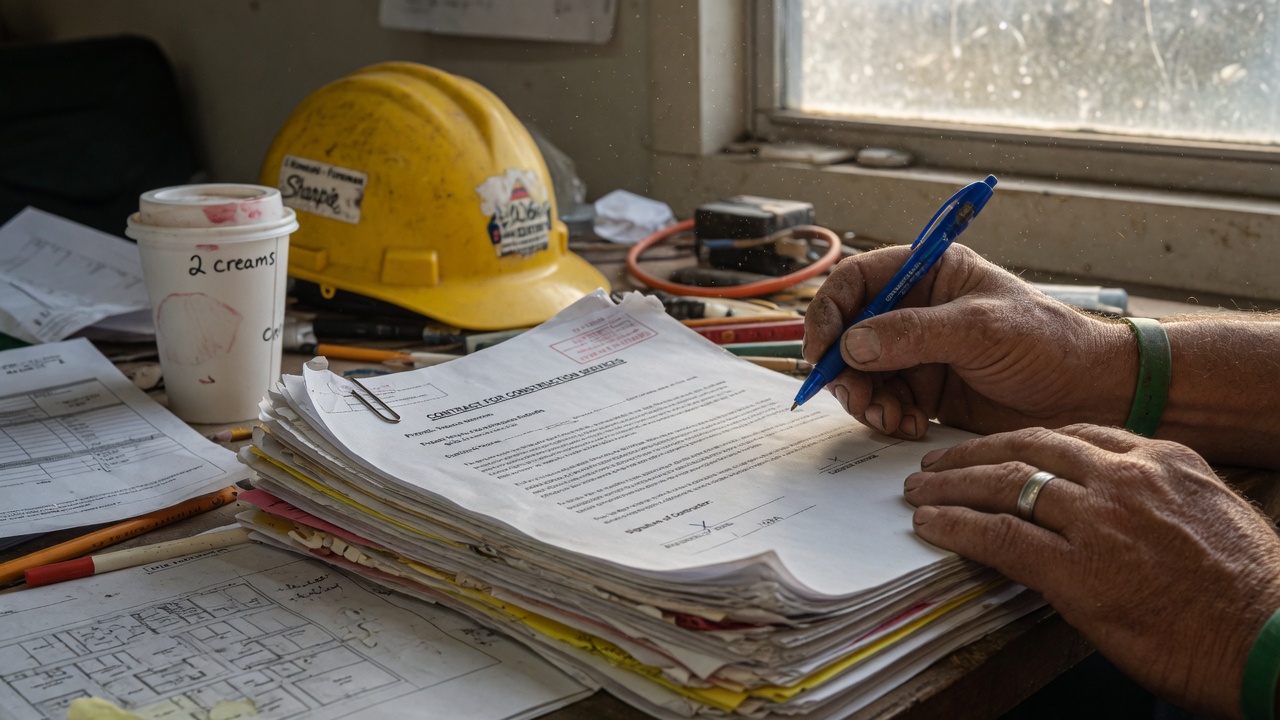
You did the work. You assumed you'd get paid. But the contract said written notice within 48 hours — and you didn't know that clause existed.
You're on site. The head contractor walks up and says the job's changed. The plan's been modified. You need to dig deeper, pour more concrete, add extra runs of cable. Whatever it is, it's not in the original contract.
You do it. You're a team player. You want to stay friendly with the head contractor. You'll sort out the payment later.
Two months later, you submit an invoice for the extra work. $50,000. The head contractor says: "We never approved that. The contract says variations need written approval within 48 hours. You didn't get it in writing, so we're not paying."
You're out fifty grand.
This is what a tight variations clause does. It turns extra work into a trap.
A variation is when the job changes from what the contract says. You do extra work, or work changes scope, or the head contractor tells you to do something different. That extra work should be paid for. That's fair.
But most contracts have a procedure for variations. And if you don't follow the procedure exactly, you don't get paid. Sometimes you get paid for the work. Sometimes you don't get paid at all.
Here's the problem: subbies follow the work, not the paperwork. When the head contractor tells you to do something, you do it. You don't stop and say "I need that in writing, signed by the project manager, within 48 hours or I'm walking."
But the contract says you have to. And if you don't, the head contractor doesn't have to pay.
Electrician. Shopping centre job. Contract says: "All variations must be requested by the principal contractor in writing, with written approval from the head contractor, and must be completed within 14 days of approval."
The site supervisor tells the sparky to run extra power to a tenancy. The sparky does it. Four days of work. He mentions to the site supervisor: "I'll get that on a variation."
The site supervisor says: "Yeah, we'll sort that out later."
It never gets sorted out. The sparky finishes the job. When he invoices for it, the head contractor says: "There's no written variation. The contract says variations need to be approved in writing within 14 days. You did this work in week 2, but there's no written approval. We're not paying."
The sparky pushed back. He'd done the work. The site supervisor told him to do it. It was only four days of work — about $8,000. But it cost him $3,000 in legal letters to argue about it. He got paid in the end, but it took three months and a lot of stress.
Another one: plumber. Apartment renovation. Contract says: "Subcontractor must notify the head contractor of any variations within 48 hours of discovery, or variations are deemed not approved."
The plumber discovers the site wasn't set out correctly. The pipework he's supposed to run won't fit the building as constructed. He has to reroute everything. He talks to the head contractor about it on site. The head contractor agrees it needs to be rerouted.
The plumber doesn't send written notice within 48 hours. He's busy. It's urgent work to get the building back on track.
Later, the head contractor says: "That rerouting is a variation. You didn't notify within 48 hours. No written approval. We're not paying."
The plumber ended up negotiating it down to 50% payment. Lost $6,000 on a $12,000 variation because he didn't fill in paperwork within a deadline.
Here are the different types of variations clauses you'll see:
The tight one: "All variations require written approval from the head contractor before work commences. If the subcontractor commences work without written approval, no payment is due."
That one's brutal. It means if you do any work that's not in the contract without a signed piece of paper FIRST, you don't get paid.
The medium one: "Subcontractor may claim variations if they have been directed by the head contractor. Claim must be submitted within 7 days of completion of the variation work, with evidence of the direction."
This one's somewhat fair. You have to prove the head contractor told you to do it, but you don't have to have written approval before you start.
The loose one: "The subcontractor may propose variations for approval. If the head contractor agrees, the variation may proceed. Payment for variations is by negotiation."
This one's dangerous in a different way. There's no procedure, so when you disagree about what was approved, there's no paper trail to prove anything.
A fair variations clause says something like:
"If the head contractor directs the subcontractor to carry out work outside the scope of the contract, the subcontractor may claim a variation. The claim must be submitted within 10 days of completing the work. The head contractor must approve the claim within 5 days. If no approval is given, the parties may negotiate the claim. Payment for approved variations is at a rate to be agreed, or if no rate is agreed, at the subcontractor's cost plus a reasonable profit margin."
That's fair because:
Most contracts aren't fair. Most are tight. They're designed to let the head contractor avoid paying variations by hiding behind a procedure you didn't follow.
Search for "variation," "variation order," "variation procedure," or "change."
Read the whole section. Look for:
If the clause says:
Before you sign: Ask the head contractor if the variations clause is negotiable. Say: "Our process requires us to get site direction in writing. Can we agree that email from your project manager counts as written direction? And can we extend the notification period to 10 days?"
Some will agree. Some won't. But it's worth asking.
If you have to accept it as is: Protect yourself on site.
When the head contractor tells you to do something outside the contract, don't just do it. Stop and say: "That's a variation. I need written direction from you before I start, so we can sort out the cost after."
You're not being difficult. You're being professional. You're protecting both of you — the head contractor, because they've got a paper trail showing they approved it; and you, because you've got a paper trail showing you didn't just do random extra work.
If the site supervisor won't give it to you in writing, push back. Say: "My system doesn't allow me to start extra work without written direction. Can you email me or give me a site direction slip?"
Most head contractors will do it. If they won't, that's a red flag. If they won't approve extra work in writing, they're not planning to pay for it.
If a variation claim gets rejected: Don't just accept it. You did the work. You deserve to be paid.
Send a formal claim. Set out:
If they don't respond, you have a right to claim against them. Get a lawyer to send a letter. Most head contractors will settle rather than go to court.
But get it in writing FIRST. Don't assume a conversation on site counts as approval.
Read the variations procedure. Make sure you understand it. If it requires you to give notice within 48 hours, make sure you can actually do that. If it requires written approval before you start, make sure you can get that.
And on site, follow the procedure. Even if it's annoying. Even if you have to ask for things in writing. Even if the head contractor says "we'll sort it out later."
Because you will NOT sort it out later. And you'll be out the money.
Upload your subcontract and get a free risk report in under 60 seconds. See exactly where you're exposed.
Check my contract — it's free